Return To Journal
Showit Website Templates for Bloggers That Rank
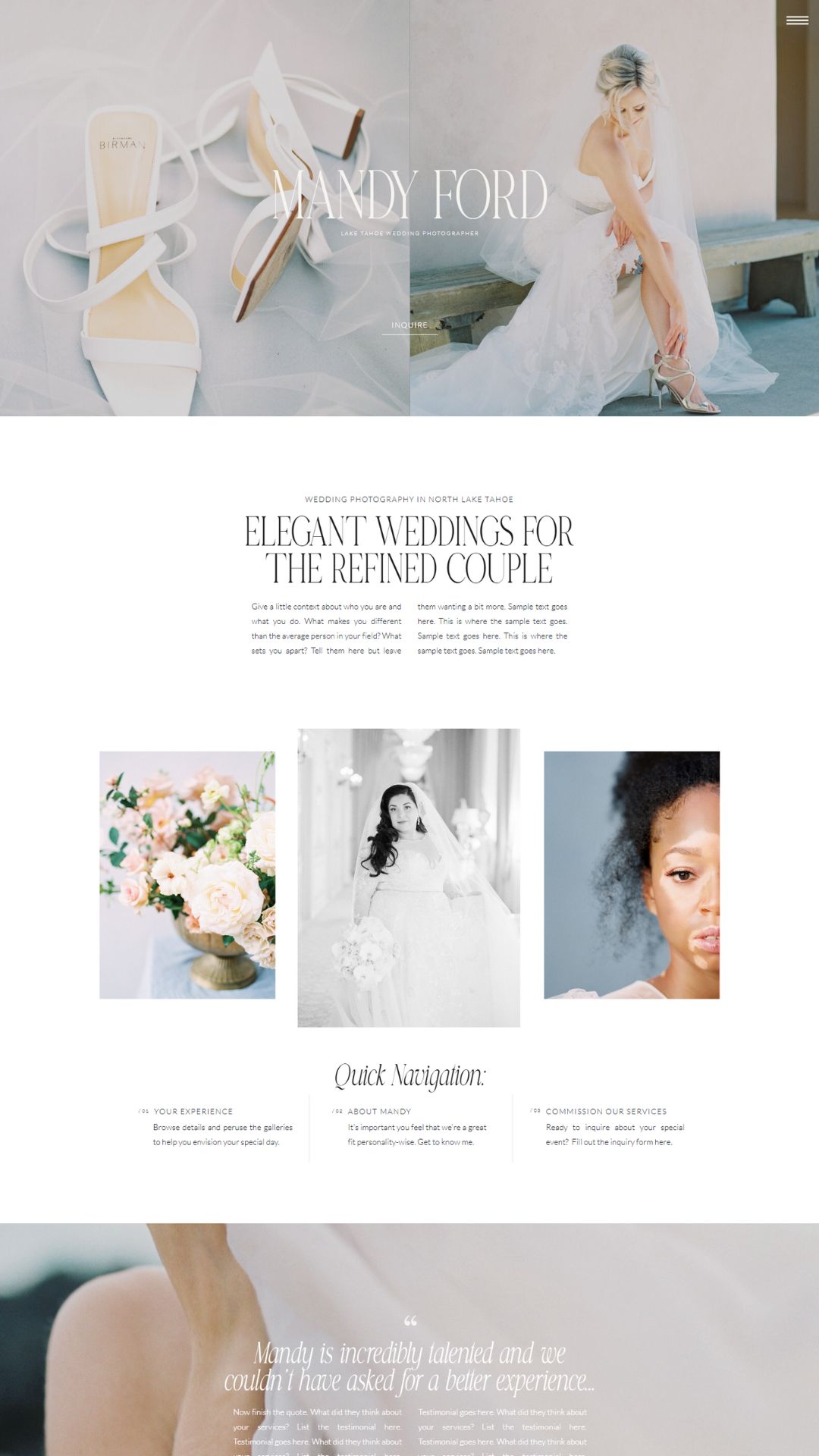
If you’re searching for Showit website templates for bloggers, you’re likely focused on design. But ranking and revenue do not come from aesthetics alone. They come from structure.
Not all Showit website templates for bloggers are built to support SEO, content clusters, internal linking, and monetization pathways. Many are visually polished but lack the blog architecture needed to build topical authority and long-term traffic.
In this guide, you’ll learn how to evaluate showit blog templates beyond the homepage demo. We break down what makes a template SEO-ready, how WordPress integration impacts ranking, how to structure content clusters, and how to design for both traffic and revenue.
Whether you are building a niche blog, a personal brand platform, or a monetized content site, this article will help you choose showit website templates for bloggers that support scalability, search visibility, and sustainable growth.
When bloggers start searching for showit website templates for bloggers, they are usually thinking about design. They want something clean, modern, maybe minimal. They scroll through demos, admire typography, and imagine their content inside the layout.
What they are rarely evaluating is structure.
Ranking is not a design outcome. It is a structural outcome. And most showit website templates for bloggers are built to look good in a preview, not to support long-term SEO performance.
I have reviewed dozens of showit blog templates over the years. The pattern is consistent. Beautiful homepage. Strong hero section. Polished brand presentation. But when you click into the blog archive, the structure falls apart.
A website can be visually refined and still fail strategically. Many showit blogging templates prioritize aesthetics over architecture. They focus on mood rather than hierarchy.
Search engines do not rank mood. They rank clarity.
If your categories are unclear, your URL structure is inconsistent, or your internal linking is weak, your blog will struggle to build authority. Even the most beautiful showit website templates for bloggers cannot compensate for poor structure.
I always tell my clients that SEO begins with the bones of the site. Before we talk about color palettes or font pairings, we look at how content is organized. If the structure does not support topical depth, ranking becomes significantly harder.
Most generic showit blog templates treat blog posts like isolated pieces of content. They display recent posts in a grid and stop there. There is little thought given to category strategy, topic clusters, or long-term authority building.
A serious blogger needs more than a post feed. You need:
Without that architecture, even strong content struggles to gain traction.
When I evaluate showit website templates for bloggers, I look beyond the homepage and into the blog index. Does the layout support content hierarchy? Are posts organized in a way that reinforces topical authority? If not, ranking becomes an uphill climb.
Internal linking is one of the most overlooked ranking factors in template design. Many templates do not account for strategic cross-linking between related articles. They rely solely on sidebar widgets or recent post sections.
That approach limits authority growth.
A strong SEO friendly showit website template should make it easy to guide readers deeper into related content. Category pages should not feel like afterthoughts. They should be intentional hubs.
Search engines use structure to understand relevance. If your content exists in silos, your visibility will remain fragmented.
There is nothing wrong with wanting a beautiful website. Design absolutely matters. But when bloggers choose showit website templates for bloggers based solely on visual appeal, they often sacrifice performance.
Ranking requires:
Showit’s WordPress integration is powerful, but only if the template supports it correctly.
If your goal is traffic, your template must do more than showcase your brand. It must support a scalable content strategy. The bloggers who rank consistently are not just publishing content. They are building infrastructure.
If you are serious about ranking, you cannot evaluate showit website templates for bloggers the same way you would evaluate a brand photoshoot. You have to look at structure first.
A template that ranks is not simply attractive. It is organized, scalable, and technically sound. When I assess showit website templates for bloggers, I move past the homepage immediately. I study how the blog is built, how posts are structured, and how WordPress is integrated.
SEO is not a plugin. It is architecture.
One of the biggest advantages of using Showit is its WordPress integration. Your blog runs on WordPress, which means you have access to strong SEO capabilities.
However, that advantage only works if the template supports it properly.
An SEO friendly showit website template should allow:
If a showit blog template treats the blog as an afterthought, your ranking potential decreases. I always ensure that the blogging experience feels intentional rather than secondary to the homepage design.
Bloggers need structure that supports publishing consistently and organizing content clearly. Without that foundation, traffic becomes inconsistent.
Search engines rely on structure to understand your authority. If your categories are vague or overly broad, your topical signals weaken.
A ranking-focused approach to showit website templates for bloggers includes:
For example, if you write about SEO, email marketing, and content strategy, those should not live under one generic category. Each topic should have its own structured hub.
Strong structure makes it easier for both readers and search engines to navigate your content.
Layout affects behavior. Behavior influences performance.
If your showit blogging template buries the content under heavy graphics or pushes readers away with cluttered sidebars, engagement drops. When engagement drops, ranking potential weakens.
A high-performing blog layout includes:
When evaluating showit website templates for bloggers, I look at how easy it is to scan an article. Long-form content needs breathing room. It needs rhythm. It needs structure that supports scroll depth.
Beyond visual design, technical details matter.
Your template should support:
Even the most beautiful showit blog templates will struggle if they are heavy, cluttered, or poorly structured on mobile.
Ranking is cumulative. It reflects technical setup, content depth, internal linking, and user engagement. A template cannot guarantee traffic, but it can either support your strategy or quietly limit it.
When you choose showit website templates for bloggers, choose one that treats SEO as infrastructure, not decoration.
Traffic alone does not build a business. Revenue does. When bloggers search for showit website templates for bloggers, they often focus on how to get more visibility. What they should also be asking is how their website supports monetization once that traffic arrives.
A blog that ranks but fails to convert is unfinished. Structure must support both discovery and decision-making.
If you want sustainable traffic, you need more than isolated blog posts. You need clusters.
Content clusters group related articles under a central pillar topic. This structure signals authority to search engines and improves internal navigation for readers. Instead of publishing scattered content, you build depth around core themes.
When I design for bloggers, I map pillar topics first. Each pillar becomes a strategic anchor. Supporting articles link back to that main page and to each other. That interconnected structure strengthens ranking signals over time.
Most generic showit blog templates do not account for this architecture. They display posts chronologically rather than strategically. A ranking-focused approach to showit website templates for bloggers prioritizes category clarity and internal linking pathways.
Structure builds authority. Authority builds traffic.
Traffic without capture limits growth. Your website should convert readers into subscribers naturally.
A high converting blog layout integrates opt-ins thoughtfully rather than aggressively. I avoid cluttering the top of every page with pop-ups. Instead, I focus on contextual placement.
Strong email opt in website design includes:
When evaluating showit website templates for bloggers, I look for flexibility in opt-in placement. You should be able to integrate lead magnets seamlessly without disrupting user experience.
Monetization begins with ownership of your audience.
Many bloggers monetize through affiliate marketing, digital products, or services. Your structure should support those pathways clearly.
Affiliate marketing website structure works best when links are integrated within well-organized, in-depth content. Clarity and transparency matter. Your layout should make product mentions feel intentional rather than forced.
If you sell digital products or courses, your blog should connect readers to those offers through logical transitions. Internal links to sales pages, resource hubs, and landing pages should feel like natural next steps.
Showit website templates for bloggers that convert are designed with revenue flow in mind. They guide readers from content consumption to action without feeling transactional.
Engagement influences performance. When readers stay longer, scroll deeper, and interact with multiple pages, search engines interpret that behavior as positive.
Design influences that behavior more than most bloggers realize.
A strong showit blogging template should prioritize:
When structure supports engagement, content performs better. When content performs better, revenue opportunities expand.
Traffic is not accidental. Neither is monetization. The right showit website templates for bloggers treat design as infrastructure for both.
When bloggers search for showit website templates for bloggers, they often look for curated lists. “Top 5.” “Best of.” “Most popular.” Those articles attract attention because they promise quick decisions.
But popularity does not equal performance.
Instead of choosing based on aesthetics alone, I recommend evaluating templates through a strategic lens. The goal is not to find the trendiest layout. The goal is to choose a structure that supports ranking and revenue.
Minimal does not mean empty. It means intentional.
The strongest showit blog templates I review prioritize readability and hierarchy. They use clean typography, clear spacing, and structured headings that support long-form content.
When evaluating minimal showit website templates for bloggers, look for:
A minimal layout often performs better because it reduces distractions. Readers stay focused on content. Search engines recognize clean structure.
Many bloggers operate as personal brands. Their website needs to balance authority with approachability.
Personal brand-focused showit blogging templates usually include:
When assessing these showit website templates for bloggers, ensure that the homepage does not overshadow the blog. Your blog must remain central. If the design prioritizes static branding over dynamic content, ranking potential can decline.
The most effective personal brand templates treat content as the main asset rather than a secondary feature.
If you monetize through affiliate marketing or partnerships, structure becomes even more important.
Look for templates that support:
A strong showit website template for content creators allows you to highlight tools, products, and recommendations without cluttering the layout.
Affiliate-heavy blogs benefit from organized categories and internal linking that supports topical depth. Without that structure, even well-written reviews struggle to gain traction.
Before purchasing any showit website templates for bloggers, review the demo site carefully.
Click into multiple blog posts. Study the archive pages. Check how categories are displayed. View the mobile layout.
Ask yourself:
A template is not just a visual decision. It is a strategic foundation. The bloggers who rank consistently are not simply choosing what looks good. They are choosing what scales.
There comes a point where choosing between different showit website templates for bloggers is no longer the real question. The deeper question becomes whether a template can support the scale you are building toward.
Templates are excellent starting points. They help you launch quickly. They provide structure while you refine your niche and publishing rhythm. But serious bloggers eventually outgrow starter frameworks.
If your goal is casual publishing, a basic showit blog template may be enough. But if you are building long-term traffic, multiple content clusters, and diversified revenue streams, structure becomes more complex.
As your blog grows, you may need:
Most showit website templates for bloggers are designed for simplicity. They are not built with multi-layer content ecosystems in mind. When your blog expands, that simplicity can become a limitation.
Many bloggers begin with display ads. Over time, they introduce digital products, affiliate partnerships, memberships, or services.
Monetization shifts your structural needs. You require intentional funnels and need strategic transitions between blog posts and offer pages. You may also need evergreen landing pages optimized for conversions.
A high converting blog layout is not just about placement of banners. It is about flow. The journey from reading to action should feel natural.
If you find yourself forcing sales messaging into a layout that was not designed for it, that tension often signals that your structure needs refinement.
Authority is cumulative. It builds through depth, clarity, and consistency.
Custom showit website design allows your entire ecosystem to be mapped intentionally. Instead of adapting your strategy to fit a template, your template is built around your strategy.
Luxury showit website design is not about decoration. It is about precision. It allows your categories, clusters, landing pages, and revenue pathways to function cohesively.
If you are publishing consistently, growing traffic, and monetizing strategically, your website should evolve alongside your ambitions. Showit website templates for bloggers can be a powerful beginning. For a serious blogger building a long-term asset, strategic customization often becomes the next step.
Choosing from showit website templates for bloggers is only the first step. Ranking consistently requires strategy beyond layout. Once your structure is solid, the next layer is intentional SEO execution.
Most bloggers think SEO is about inserting keywords into posts. That is only part of the equation. Real growth happens when your entire site is built around topical authority.
Before writing, I recommend mapping your core themes. Instead of publishing randomly, define three to five primary pillars that align with your expertise and monetization goals.
Each pillar becomes a hub. Around it, you create supporting articles that link back to that central page. Over time, this internal structure signals depth to search engines.
When showit website templates for bloggers are paired with clear cluster strategy, the results compound. Your categories stop being labels and start becoming authority signals.
If you write about SEO, for example, that topic should not exist as one isolated article. It should become a structured network of guides, tutorials, and case studies that reinforce one another.
Authority builds through repetition and reinforcement.
Internal linking is one of the most powerful tools bloggers underuse.
Each new article should connect to existing content intentionally. That connection helps search engines understand relationships between topics. It also guides readers deeper into your ecosystem.
A well-structured showit blog template should make related posts easy to feature. Beyond automated “related articles” sections, I recommend manual contextual links within your content.
When someone reads about email growth, they should naturally encounter links to content about opt-in design, lead magnets, and conversion strategy. That journey increases engagement and strengthens your SEO signals.
Showit website templates for bloggers that support strong hierarchy and clear navigation make this linking process far more effective.
Search behavior is evolving. Bloggers are no longer competing only on traditional search engines. AI tools now surface content based on clarity, authority, and structure.
To stay visible, your blog should:
AI tools prioritize well-organized, in-depth content. When your showit website templates for bloggers support clean formatting and readable hierarchy, your content becomes easier to extract and reference.
SEO today is not just about ranking on a results page. It is about being the most structured, most authoritative answer within your niche.
When your design and strategy work together, your website stops being a collection of posts and becomes a long-term traffic asset.
As you evaluate different showit website templates for bloggers, you are likely balancing design, SEO potential, and long-term growth. These are the most common questions I hear from bloggers who want more than just a visually appealing site.
Yes, especially when paired with its WordPress integration. Your blog content runs on WordPress, which gives you access to strong SEO tools and plugin flexibility while maintaining full design control through Showit.
Showit website templates for bloggers work well when the blog structure is treated as the core asset rather than a secondary feature. If your content strategy is intentional, Showit provides the flexibility to build both authority and brand presence.
Showit is not a replacement for WordPress. It is a design layer that integrates with it.
If your priority is visual flexibility and brand control, Showit offers significantly more creative freedom than traditional WordPress themes. Your blogging engine remains powered by WordPress, so you retain SEO functionality while elevating design.
For bloggers who care about both ranking and aesthetics, showit website templates for bloggers provide a hybrid solution.
A template alone does not guarantee SEO success. However, an SEO friendly showit website template supports strong heading hierarchy, clean layout, and organized categories.
Your ranking performance will depend on content depth, internal linking, and keyword strategy. The template simply provides the structure that makes those efforts easier to execute consistently.
Pricing varies depending on the designer and complexity of the layout. Entry-level showit blog templates may be more affordable, while premium designs reflect more refined structure and customization flexibility.
The real cost consideration is not the template itself. It is whether the structure can scale with your traffic and monetization goals. A lower upfront investment may require restructuring later if your blog grows significantly.
If your traffic is increasing, your monetization is expanding, and your content clusters are deepening, you may begin to feel limited by a standard template.
Custom showit website design allows your site architecture to be built around your exact strategy. Instead of adapting your business to fit a template, the design evolves with your growth.
If you are serious about growth, choosing from showit website templates for bloggers is not just a design decision. It is a strategic one.
Your website should support ranking, reader engagement, email growth, and monetization seamlessly. It should feel cohesive, intentional, and scalable.
When I design custom Showit websites for bloggers, I begin with structure. I map content clusters, internal linking pathways, and revenue funnels before refining the visual direction. Design becomes the final layer, not the starting point.
If you are ready to move beyond simply selecting a template and instead build a blog structured for long-term authority and income, I would love to support you.
Let’s create a Showit website that ranks consistently, converts strategically, and grows with you.
"They made everything feel very intentional and strategic from the beginning. They took the time to understand not just my business, but the type of clients I want to attract. That gave me a lot of confidence that the investment would actually move the needle, not just improve aesthetics...."
- Catherine Cortes, RI Wedding Photographer
"I felt comfortable investing in a website design with High Tide Strategy because there is a team of people working on my website who knows their stuff when it comes to SEO, while also making my website aesthetic, and on top of that they get your website back to you within a week which is super nice!"
- Emma Rose Photography
"Mandy and her team stay on top of the latest marketing strategies and genuinely care about helping business owners succeed. I am so grateful I chose to work with them."
- Erica Ewing, Photographer & Business Coach
A full-service digital marketing agency specializing in Showit website design, Shopify website design, SEO for creatives, and paid ad strategy across Pinterest, Meta, and Google. We help photographers, small business owners, and creative entrepreneurs build intentional brands that align with their vision and drive measurable results. Our signature services include social media marketing, Pinterest management, and 7-Day SEO and Ad Strategy Surges — all designed to increase visibility, improve conversions, and simplify growth. At High Tide Strategy, we combine data-driven strategy with refined design to create marketing systems that are both beautiful and built to perform.
