Return To Journal
Google Business Profile for Wedding Photographers: Why Being Verified Isn’t the Same as Being Visible
Filed in:
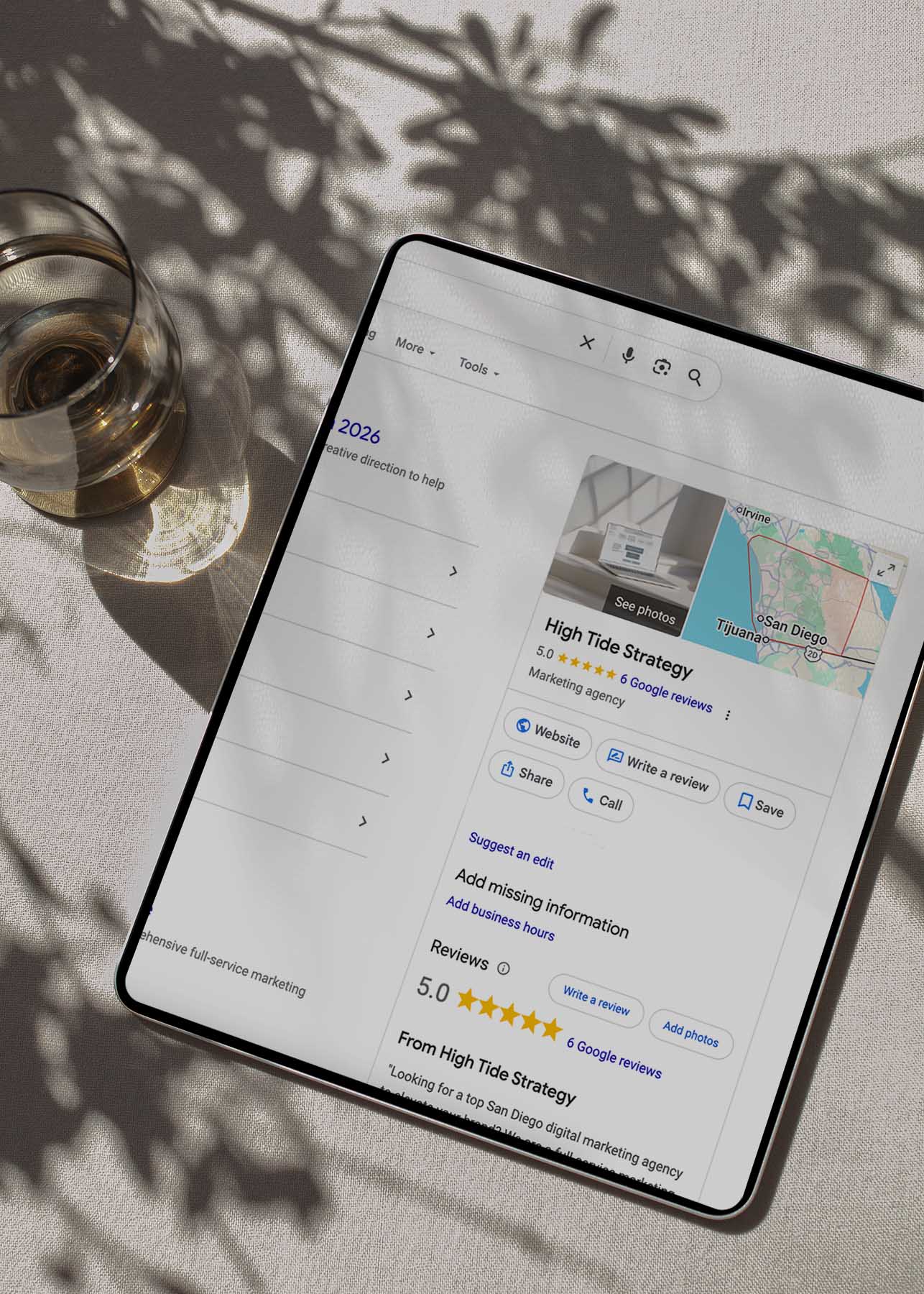
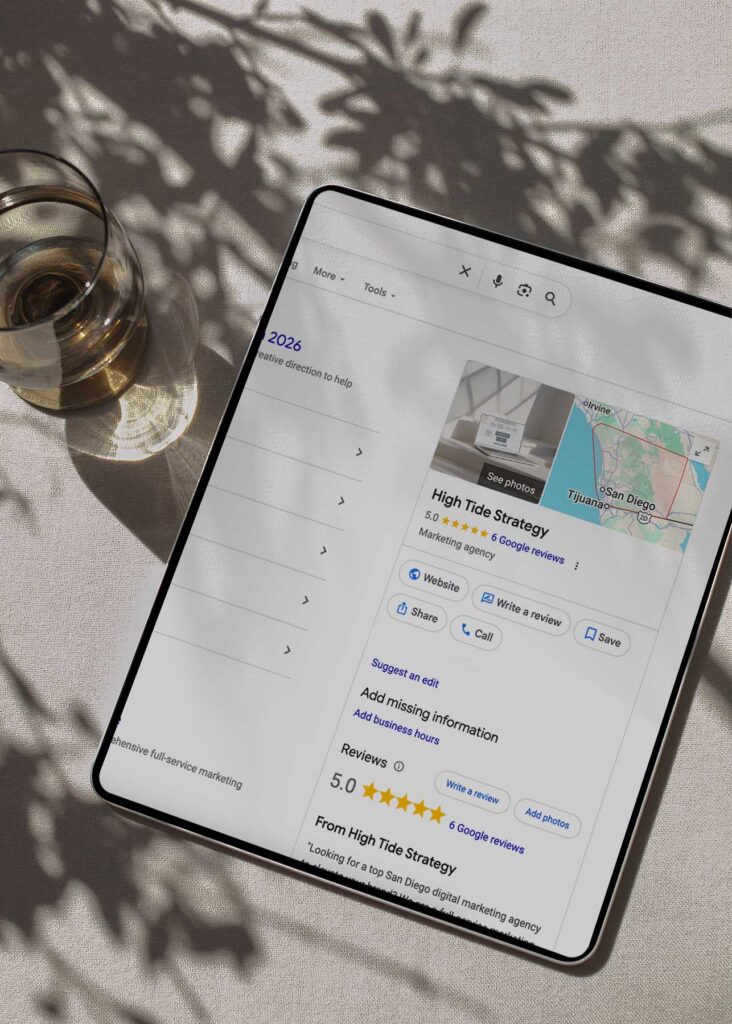
You verified your Google Business Profile. Your website says where you photograph weddings. You have venue blogs. You have reviews. So why, when you search for a wedding photographer in the market you want to book, are three other photographers still showing up before you? Because local search visibility is bigger than your Google Business Profile.
A strong Google Business Profile for wedding photographers can give Google valuable information about your business and create another way for couples to discover you. But it works inside a much larger search ecosystem. Your website matters. Your content matters. Your location relevance matters. Reviews, backlinks, publications, technical SEO, and the broader information available about your business online can matter too.
That is what local search marketing for photographers really looks like. We are not optimizing one listing and crossing our fingers. We are building enough evidence around your business that the markets you want to be known in begin making sense in connection with your name.
Because your listing is one source of information about your business. Google has an entire internet to look at. Imagine you are trying to become more visible as a Newport wedding photographer. Your Google Business Profile is accurate and maintained, but your website barely mentions Newport. You have no Newport weddings published. Your portfolio pages provide very little context. None of your venue content supports the market. Your external mentions are primarily associated with another state.
The profile can only tell so much of the story. Now imagine the opposite. Your website clearly establishes Newport as an important market. You have photographed weddings there. Several venue articles support it. Those articles link naturally into your wedding services and location content. A planner has linked to your work. A wedding publication mentions the venue and credits you. Reviews reference weddings you photographed in the area. We now have significantly more context. That is the difference between putting a location on your profile and building authority around a location.
Your Google Business Profile gives Google structured information about the business and can give couples another path to discover you through local search experiences. We care about making sure it accurately reflects your business, services, website, location setup, imagery, and current brand. But we never want it operating alone.
When we work on local SEO, one of the first things we look for is alignment between the profile and the website. Not identical wording. Not the same keyword pasted everywhere. The same understanding everywhere.
First, we want to know what you are trying to accomplish. “Rank locally” is not specific enough. Where? For what? For whom?
A wedding photographer trying to strengthen her position in Charleston needs a different strategy from a photographer based in Boston who wants to book more Newport weddings. A photographer with years of authority in San Diego but almost none in Palm Springs has a different problem again.
This is why we do not start by opening an SEO tool and picking the keyword with the largest number beside it. We start with the business. Which markets matter? Which services matter? What kind of weddings are you trying to book? Where do you already have authority? Where are you trying to build it? Then we look at search behavior. SEO strategy should follow the business strategy, not the other way around.
Local SEO focuses more heavily on geographic relevance and searches connected to a particular area. Broader photography SEO may include searches where location plays a smaller role, educational searches, style-based searches, planning questions, venue research, or other topics connected to the photographer’s expertise.
For wedding photographers, those worlds frequently overlap. Someone may search “Newport wedding photographer” one day and “best wedding venues in Newport” the next. Those are different searches, but both can contribute to a broader strategy around becoming more relevant to weddings in Newport. That is why we think in ecosystems rather than isolated keywords.
Start by making sure the profile accurately represents the business that exists today. Is it verified? Is your business name correct? Is your website connected properly? Is your primary category appropriate? Are your services current? Does the location or service-area setup accurately represent how you operate? Does the imagery resemble the weddings you want someone to hire you for?
Then look at your reviews. Are they current? Do they describe the experience of working with you? Have you built review collection into your workflow, or do you remember Google reviews approximately once every eighteen months? These are not glamorous questions. They are useful ones.
Use natural, accurate language where it makes sense, but do not turn every available field into an excuse to repeat your target city. This is where SEO can get ridiculous very quickly. If you are a Charleston wedding photographer, Google does not need you to find twelve increasingly awkward ways to say “Charleston wedding photographer” inside one profile.
We want clarity, not keyword confetti. Your categories, services, business information, website, reviews, and other profile elements should collectively help someone understand the business. Then the rest of your online presence can develop that understanding much further.
This requires more nuance. Your Google Business Profile should accurately represent your real-world business and follow Google’s current eligibility and representation guidelines. We would not create fake offices or manipulate addresses because you want to rank in several destination markets. Your organic website strategy gives us considerably more room to establish authority beyond your immediate location.
If you are based in New England but photograph weddings in Charleston every year, we can potentially build meaningful Charleston relevance through actual work, venue content, location pages, internal links, publications, backlinks, and other supporting evidence. You do not need to pretend you live somewhere to become relevant there.
This is where local search marketing becomes much more interesting than “put your city in the H1.” We want to understand how your website supports the market. If Charleston is strategically important, what exists beneath that claim?
Do you have a useful Charleston page? Real weddings? Venue content? Service information? Relevant internal links? External mentions? Images and copy that demonstrate genuine experience in the market? Or does the entire strategy consist of “Charleston, SC” sitting quietly in your footer? There is a substantial difference.
No. Please do not leave this blog and build 36 identical pages called “[City] Wedding Photographer.” That is not what we mean by local SEO. A location page should exist because there is enough strategic reason and useful information to justify it. If you genuinely want to build authority in Newport, Charleston, and Palm Beach, those markets may deserve meaningful content.
If you photographed one engagement session in a town seven years ago and have no intention of working there again, it probably does not need its own SEO empire. Depth where depth matters.
Enough useful, original information to make the page valuable for the person searching that market. That could include your experience photographing there, the type of work you offer, relevant venues or locations, portfolio examples, your approach, travel information when useful, FAQs, testimonials, and links into related resources.
The exact structure should follow the search intent and the business. We are not trying to reach an arbitrary word count. We are trying to create a page worth finding.
Venue blogs can be incredibly useful for wedding photographers. They can also become an enormous pile of content that accomplishes almost nothing. The difference is strategy.
If you want to become more authoritative around Newport weddings, publishing genuinely useful content around Newport venues can help develop that topical and geographic ecosystem.
A Rosecliff wedding feature can support a Rosecliff search. A broader Newport venue guide may serve someone earlier in planning. A real wedding can demonstrate experience. Those pieces can then connect naturally with your Newport location page and wedding photography services.
Now the content is doing more than existing. It is supporting something.
There is no magic number. I would rather see five strategically selected venue pieces supporting a market you genuinely want than thirty generic venue blogs created because someone told you blogging is good for SEO.
Before we recommend content, we ask: What authority are we trying to build next? Then we decide what content could help us build it. That question prevents you from spending six months publishing blogs that have nothing to do with where the business is going.
They can. When relevant websites mention and link to your business, those links can contribute to the authority and context surrounding your website. For wedding photographers, that may come naturally through publications, planners, venues, directories, interviews, features, or other legitimate industry relationships.
Again, context matters. One relevant link from a respected publication featuring a wedding you photographed may be far more interesting strategically than 200 questionable directory links someone sold you in an “SEO backlink package.”
We want the internet around your website to make sense. If your website says you are deeply established in a market and absolutely nothing else online supports that claim, there may be an opportunity to strengthen the surrounding evidence.
Your broader digital presence can absolutely help establish consistency around the business, but we want to be precise about what each platform is doing. Instagram is not your Google Business Profile. A review is not a backlink. A Pinterest pin is not a location page.
They are different surfaces with different functions. What we care about is whether the broader internet tells a coherent story about the business.
If your website says Newport, your portfolio demonstrates Newport, planners mention you in Newport, publications credit your Newport work, reviews reference Newport weddings, and your broader presence supports that association, we have something much stronger than a keyword repeated twenty times. The internet should be able to back you up.
This is the unglamorous part we care about perhaps a little too much. Technical SEO is the quiet powerhouse underneath the content strategy.
You can write an excellent location page, but we still need search engines to access and understand it properly. Broken internal links, indexing problems, redirect issues, poor site structure, missing metadata, problematic schema, or other technical issues can complicate the strategy sitting above them.
Photography websites add another layer because they are naturally image-heavy. And no, our solution is not to make your beautiful photography website look like an accounting firm designed it. We want the portfolio. We also want the website functioning properly underneath it. Beautiful and technically strong are allowed to exist in the same room.
The biggest one is treating every SEO recommendation like an independent assignment.
Optimize GBP.
Write venue blogs.
Create location pages.
Get backlinks.
Add keywords.
Fix site speed.
Ask for reviews.
Technically, none of those suggestions are inherently bad. But what are they collectively trying to accomplish? That is where many photography SEO strategies fall apart. A photographer can spend an entire year “doing SEO” while building six different things that barely support one another. We would rather decide what the website needs to become more authoritative around and make each move support that goal. More SEO activity does not automatically create more SEO authority.
Not in the simplistic way this is often presented. Google is not sitting there with a calendar punishing photographers who missed their Tuesday blog. Publishing strategically useful content can help you develop authority around important topics, markets, services, and searches. Updating existing content can also be valuable. But publishing something solely because another month passed is not the strategy.
If an existing article is gaining traction, we may strengthen it. If a market needs more depth, we may build around it. If the website already has 80 weak blogs, our first recommendation may be to stop publishing and figure out what those 80 pages are doing. Content should compound, not accumulate.
When the problem is bigger than one page. Sometimes we audit a website and find a handful of straightforward opportunities. Great. We fix them. Other times, the problem is structural.
Pages are competing with one another. The target markets have changed. Years of content have no clear architecture. Important URLs were changed during a redesign. Technical problems are hiding underneath the site. The Google Business Profile and website barely resemble the same business.
That is when another title-tag tweak is not going to cut it. Our 7-Day SEO Surge exists for that kind of course correction. We benchmark first, investigate what is already working, identify the gaps, and then concentrate the overhaul into a focused week. That does not mean Google hands us the rankings we want seven days later.
It means we can complete the strategic and technical work quickly, then allow the authority created by that work to build over time. The work can happen quickly. The authority it creates builds over time.
Absolutely. If you want to understand SEO, you can learn keyword research, Google Business Profile optimization, content strategy, internal linking, technical foundations, tracking, and many of the other pieces involved.
The harder part is usually deciding which one deserves your attention first. That is why we built The Marketing Lab around implementation.
We do not want you collecting another 14 hours of SEO videos and feeling incredibly educated while your website remains untouched. Learn the concept. Understand why it matters. Apply it. Move forward.
Marketing Lab Premium adds coaching, feedback, strategy, check-ins, and content lock-ins for photographers who want help making those decisions and getting the work finished.
And if you read this entire article and thought, “Mandy, I would rather photograph a Tuesday courthouse wedding in a hurricane than personally investigate my site architecture,” that is also useful information.
Our SEO services exist because you do not have to become your own search strategist to benefit from having one.
Local search marketing is the strategy of making a photography business more discoverable for searches connected to the locations and services it wants to book.
For photographers, that can include website SEO, Google Business Profile optimization, location and venue content, reviews, backlinks, publications, technical SEO, and other signals that help establish relevance and authority.
There may not be one single reason. Your location relative to the searcher, competition, profile relevance, reviews, prominence, website authority, content, backlinks, and broader local signals can all influence visibility.
That is why we look at the ecosystem before assuming the profile itself is the entire problem.
Sometimes. A strategically important market may deserve its own useful location page, particularly when you have genuine experience, services, portfolio work, and supporting information relevant to that market.
That does not mean every city you are willing to drive to needs its own page.
Organic search visibility can extend beyond your immediate business location, particularly when you have genuine relevance and authority around another market. That might include real weddings, venue content, useful location pages, backlinks, publications, and other supporting evidence.
Your Google Business Profile, however, should accurately represent your real-world business and comply with Google’s current guidelines.
There is no universal timeline. An established photography website with years of authority is starting from a very different position than a brand-new domain entering an extremely competitive wedding market.
We can control the research, strategy, technical work, implementation, and quality of the content. We cannot promise exactly when Google will move a particular result.
We would not frame them as competitors. Your Google Business Profile can support local discovery and provide useful structured information about the business. Your website gives you considerably more space to establish your services, expertise, markets, portfolio, content, and broader search authority.
We want them supporting one another. Not the same keyword everywhere. The same understanding everywhere.
Your future client is not thinking about your topical authority. She is not admiring your internal linking structure. She has no idea what schema is. She is trying to find a photographer.
Maybe she searches Google Maps. Maybe she searches a venue. Maybe she asks an AI tool for recommendations. Maybe she finds a planner’s blog featuring your work and then searches your name.
Your job is not to predict the exact path she will take. Our job is to make sure that wherever search intersects with your business, there is enough clarity and authority around your name for you to have a chance of being discovered.
That is why local search marketing for photographers is bigger than a Google Business Profile. We want the profile optimized. Then we want the website, content, technical foundation, reviews, backlinks, publications, and broader online presence strengthening the same story.
If you want our team to build that ecosystem for you, explore our SEO services. If the existing strategy needs a more concentrated course correction, our 7-Day SEO Surge gives us a focused week to investigate and rebuild the foundation.
Or, if you want to understand the strategy and run it in-house, join us inside The Marketing Lab.
A Google Business Profile can tell Google where you are. The larger strategy helps establish why your business belongs in the conversation.
Your SEO strategy should match where your business is now — and where you’re trying to take it. High Tide Strategy offers SEO services for photographers, wedding professionals, and creative businesses ranging from focused optimization and ongoing expansion to complete SEO overhauls, AI visibility strategy, and education.
Not sure which level of SEO support you need? Explore our full range of SEO services, including ongoing SEO expansion, advanced search strategy, and options designed to strengthen your visibility across Google, AI search, and the platforms shaping how clients discover businesses online.
If your SEO needs more than a few adjustments, our 7-Day SEO Surge is our intensive, done-for-you SEO overhaul. We dig into the strategy, technical foundation, content, keywords, local visibility, and authority signals behind your website — then rebuild what’s holding your search performance back.
Prefer to understand and implement the strategy yourself? Inside The Marketing Lab, we break down SEO, AI search, content, website strategy, and digital marketing into practical education built specifically for creative business owners.
You don’t have to diagnose it yourself. Book a free SEO consultation and let our team get eyes on your website, where you’re currently showing up, and what may be limiting your visibility. We’ll help you determine the smartest next move based on your goals, market, and current SEO foundation.

Mandy Ford is the founder and lead strategist behind High Tide Strategy, a full-service marketing studio specializing in SEO for photographers, Showit website design, and digital marketing for creative businesses. She helps photographers, wedding professionals, and creative brands build stronger visibility across Google, AI search, and social search… then turn that visibility into qualified inquiries. Known for looking beyond surface-level SEO tactics, Mandy’s approach connects search strategy, website design, and aesthetics to build businesses that are easier to find, understand, trust, and hire online. Want to see if we’re a great fit? Reach out to schedule your free consultation.
"They made everything feel very intentional and strategic from the beginning. They took the time to understand not just my business, but the type of clients I want to attract. That gave me a lot of confidence that the investment would actually move the needle, not just improve aesthetics...."
- Catherine Cortes, RI Wedding Photographer
"I felt comfortable investing in a website design with High Tide Strategy because there is a team of people working on my website who knows their stuff when it comes to SEO, while also making my website aesthetic, and on top of that they get your website back to you within a week which is super nice!"
- Emma Rose Photography
"Mandy and her team stay on top of the latest marketing strategies and genuinely care about helping business owners succeed. I am so grateful I chose to work with them."
- Erica Ewing, Photographer & Business Coach
A full-service digital marketing agency specializing in Showit website design, Shopify website design, SEO for creatives, and paid ad strategy across Pinterest, Meta, and Google. We help photographers, small business owners, and creative entrepreneurs build intentional brands that align with their vision and drive measurable results. Our signature services include social media marketing, Pinterest management, and 7-Day SEO and Ad Strategy Surges — all designed to increase visibility, improve conversions, and simplify growth. At High Tide Strategy, we combine data-driven strategy with refined design to create marketing systems that are both beautiful and built to perform.

