Mandy is a marketing strategist and creative director known for blending artistry with analytical precision.
welcome to the journal
Remember the clients who booked you when you were charging $250 for a family session? The ones who referred their friends, shared your work on Facebook, and came back year after year? They helped you build your portfolio, gain confidence, and establish your photography business. Naturally, the thought of telling them your sessions now start at $750 can feel uncomfortable.
But as your experience grows, so do your expenses, the quality of your services, and your vision for the business you’re building. The rates that made sense when you were photographing sessions on weekends may no longer support your income goals, your family, or the level of service you want to provide.
Learning how to raise your photography prices means understanding that some clients will happily make the transition with you, while others may no longer be able to afford your full sessions. Neither outcome diminishes the relationship you’ve built.
There are thoughtful ways to communicate a photographer price increase, preserve opportunities for loyal clients to return, and develop a marketing strategy that reaches people who are ready to invest in your next chapter.
The goal isn’t to convince everyone to pay more. It’s to create a photography business that can continue growing without requiring you to work harder for the same income.
Raising your photography prices is a natural part of building a sustainable business, but not every client who supported you in the beginning will be able to grow with you.
You can maintain meaningful relationships with loyal clients through exclusive petite sessions and occasional, unadvertised mini sessions without continuing to offer your original rates.
A successful price increase requires more than updating your investment guide. Your marketing, website, and client experience need to support the clients you want to attract next.
Before changing your rates, understand your expenses, booking capacity, demand, and the revenue your business needs to generate.
As your photography business grows, you can continue nurturing relationships with loyal clients while creating new opportunities for them to work with you, even as your full-session pricing evolves beyond their budget.
Ready for Your Next Chapter?
Raising your photography prices is only one part of growing your business.
From attracting higher-value clients to refining your packages and marketing
strategy, High Tide Strategy can help you build the foundations for your
next stage of growth.
Why Raising Your Photography Prices Can Mean Outgrowing Your Current Clients
One of the more difficult transitions in a photography business happens when the clients who helped you get started are no longer the clients your business needs to attract.
Perhaps you spent your first few years booking affordable family sessions through neighborhood Facebook groups. You built relationships with parents who returned every holiday season, recommended you to their friends, and helped you develop a portfolio you’re proud of. Those clients were an important part of your growth, and there’s no reason to diminish the role they played simply because your business has evolved.
But the business you operated three years ago may look very different from the one you’re running today.
You might have invested in better equipment, refined your editing style, developed a more personalized client experience, or introduced professional artwork and albums. Your business expenses have likely changed, and you may have reached a point where photographing several inexpensive sessions every weekend is no longer financially or personally sustainable.
At some point, your photography pricing needs to reflect the business you’ve built rather than the business you started.
Not Every Loyal Client Will Be Your Ideal Client Forever
Imagine you’ve photographed the same family every year since you launched your business. They originally booked your $250 sessions, and they’ve been wonderful clients. Today, your full portrait experience starts at $950.
They may love your photography just as much as they always have, but that doesn’t necessarily mean they have an additional $700 to spend on family photographs.
You have two choices. You can continue offering your original rates to preserve every existing relationship, potentially limiting your availability for clients who can support your current pricing. Or you can recognize that your business has entered a different stage and find thoughtful ways to accommodate previous clients when it makes financial sense.
That doesn’t mean you need to abandon the people who supported you. It means recognizing that appreciation and affordability are two separate things.
A former client who can no longer book your full sessions might still be excited to purchase a spot in an exclusive petite-session event, refer a friend who’s looking for your current experience, or return for a milestone occasion when they’re ready to make a larger investment.
Your relationship with that client doesn’t have to end simply because their purchasing habits change.
Stop Building Your Future Around Your Introductory Prices
There’s nothing inherently wrong with introductory pricing. Offering affordable sessions while developing your portfolio, gaining experience, and establishing your reputation can be a strategic way to launch a photography business.
The challenge comes when you continue making decisions based on those introductory rates long after you’ve outgrown them.
If every price increase is followed by a wave of discounts for previous clients, you may find yourself operating two entirely different businesses: one built around your current pricing and another that still relies on what you charged years ago.
That can create scheduling problems, inconsistent revenue, and resentment when you’re delivering the same level of service for dramatically different compensation.
Instead of making exceptions indefinitely, establish clear boundaries around your current rates and create intentional opportunities for previous clients to work with you.
Later in this guide, we’ll explore how newsletter-only petite sessions and occasional unadvertised mini sessions can help you maintain those relationships while protecting the profitability of your full photography experience.
The important thing to recognize now is that outgrowing your original pricing doesn’t mean you’ve forgotten where you started. It means you’re making room for the business you’ve worked to build.
You don’t have to figure out that next stage of your business alone. Inside The Marketing Lab, we help photographers navigate pricing changes, refine their packages, and develop marketing strategies that reach clients who align with their evolving business. Whether you’re preparing for your first significant price increase or transitioning into a more premium photography experience, you’ll have guidance as you work through the decisions that come with growing your business.
Know When Your Photography Business Is Ready for a Price Increase
There’s no universal rule that says you should raise your photography prices after booking a certain number of clients or reaching a particular anniversary in your business. Some photographers need to increase their rates because their expenses have grown, while others have developed enough demand to offer a more personalized experience with fewer bookings.
Before making a change, look at what your business is telling you. Are you consistently booking clients at your current rates? Are your sessions profitable once you’ve accounted for editing, communication, travel, software, and other expenses? Do you have enough availability to deliver the experience you’re promising without working every evening and weekend?
Your answers can help you determine whether it’s time for a price increase and, just as importantly, what needs to change alongside it.
Five Signs It May Be Time to Raise Your Photography Prices
1. You’re consistently booking out your calendar. If you’re regularly turning away inquiries or scheduling sessions months in advance, your current rates may no longer reflect the demand for your services. However, a full calendar doesn’t automatically mean you’re profitable, so consider your expenses and workload before deciding on your new prices.
2. Your business expenses have increased. Equipment, editing software, insurance, gallery hosting, outsourcing, and other operating costs can gradually reduce your profit if your prices remain unchanged. Review these expenses regularly rather than waiting until your business feels financially strained.
3. Your client experience has evolved. Perhaps you’ve introduced personalized wardrobe guidance, more comprehensive planning, professional artwork, or a more refined gallery delivery process. These improvements can justify reevaluating your packages, particularly when they require additional time or resources.
4. You’re working more without earning more. If your schedule is full but your income isn’t growing, you may have reached the limits of your current business model. Increasing your rates, restructuring your packages, or introducing additional purchasing opportunities could help you generate more revenue without continually adding sessions to your calendar.
5. Your current pricing no longer supports your business goals. Maybe you’re preparing to transition into full-time photography, want to photograph fewer weddings each year, or need to outsource editing to reclaim time with your family. Your pricing should account for the business you want to operate, not simply maintain the schedule you’ve always had.
These signs aren’t a checklist you need to complete before changing your rates. They’re indicators that it’s time to examine whether your photography pricing still supports your business.
Calculate What Your Photography Business Needs to Earn
Before deciding how much to raise your photography prices, it’s important to understand what your business needs to generate. Your annual expenses, desired compensation, tax provision, profit goals, and realistic booking capacity all influence the amount you need to earn from each client.
Use our free Photography Pricing Calculator below to explore how those numbers work together. Adjust your expenses, income goals, and annual bookings to estimate the average revenue you’ll need per session or wedding.
Consider Whether Your Current Demand Supports Your Next Price Point
Understanding what you need to earn is one part of the equation. Understanding whether your current marketing can attract clients at your new rates is another.
If most of your inquiries come from a Facebook group where clients are accustomed to finding $200 family sessions, increasing your starting investment to $1,000 may create a gap between your financial goals and the audience you’re currently reaching.
That doesn’t mean your photography isn’t worth the new investment. It means you may need to reach a different audience, communicate your experience more effectively, or give your existing clients time to adjust.
Before announcing a significant increase, review where your inquiries originate, which clients are booking your most comprehensive offerings, and what questions prospective clients ask before making a decision. This information can reveal whether your immediate priority should be changing your prices, refining your packages, or improving how you attract and convert inquiries.
Inside The Marketing Lab, we help photographers evaluate these decisions together rather than treating pricing as an isolated problem. Your rates, marketing strategy, and client experience should support the same business goals.
How to Raise Your Photography Prices Without Damaging Client Relationships
One of the biggest concerns photographers have about increasing their rates is how their existing clients will respond. When you’ve spent years photographing the same families, documenting their milestones, and building genuine relationships, announcing a price increase can feel surprisingly personal.
But your clients don’t need an elaborate explanation of your business expenses or an apology for growing. They need clear communication, enough notice to plan for their next session, and an experience that continues to make them feel valued.
The way you introduce your new photography prices can make a meaningful difference in how that transition feels for everyone involved.
Give Your Existing Clients Advance Notice
Whenever possible, tell your existing clients about an upcoming price increase before announcing it publicly. A thoughtful email to your client list gives them time to book an upcoming session at your current rates and makes the change feel less abrupt.
You don’t need to offer your previous pricing indefinitely. Establish a clear deadline for booking, specify which sessions qualify, and explain when your new rates take effect.
For example, if your updated pricing begins January 1, you might announce the change in November and allow existing clients to reserve an available session at your current rates before the end of the year. If your calendar is already full, you could instead offer a limited number of advance bookings for the following season.
The important thing is to make an offer your schedule and finances can support. Announcing a price increase shouldn’t result in six additional months of bookings at rates you’ve already determined are unsustainable.
Communicate Your Price Increase With Confidence and Appreciation
Your announcement doesn’t need to read like a formal business notice. In fact, for photographers who have developed close relationships with their clients, a warm, personal email will often feel more appropriate.
Lead with appreciation for the people who have supported your business. Briefly explain that your pricing is evolving alongside your experience and the services you provide, then share the relevant dates and booking information.
Here’s an example you can adapt:
Sample Client Email
Subject:
A little update about our upcoming sessions
Hi [FIRST NAME],
I wanted you to be among the first to know that
I’ll be updating my photography collections
beginning January 1.
It’s been such a privilege to photograph so many
wonderful families over the years, and I’m
incredibly grateful for the trust you’ve placed
in me. As my business has grown, I’ve continued
refining the experience I provide, and my new
collections will reflect that next chapter.
As a thank-you for being part of this journey,
I’m giving my existing clients the first
opportunity to reserve an available session
at my current rates through November 30.
I’ll also be introducing a few exclusive
opportunities throughout the year for my email
subscribers, so there will still be ways for
us to create beautiful photographs together.
Thank you for continuing to support my business.
I can’t wait to see what we create next!
[YOUR NAME]
Notice that the email doesn’t apologize for the price increase or attempt to persuade clients that the new rates are justified. It communicates the change, acknowledges the relationship, and gives clients a clear next step.
You can adjust the tone to reflect your brand, but avoid turning the announcement into a lengthy explanation of inflation, equipment expenses, or how hard you’ve been working. Those are legitimate business considerations, but your clients don’t need to carry the responsibility for them.
Honor Existing Bookings and Establish Clear Boundaries
If a client has already signed a contract and paid a retainer, honor the pricing and terms of that agreement. Your updated rates should apply to new bookings according to the effective date you’ve communicated, unless an existing contract expressly provides otherwise.
For returning clients who inquire after the transition, consistency becomes especially important.
You may receive messages asking whether they can book at last year’s rates or whether you can make an exception because they’ve been coming to you for so long. These conversations can be uncomfortable, particularly when you genuinely appreciate the relationship.
Respond warmly, acknowledge their loyalty, and explain your current offerings. If you’ve created a petite-session program or an exclusive event for returning clients, you can introduce those opportunities without discounting your full-service experience.
Try not to negotiate your new prices differently with every returning client. Beyond the financial implications, inconsistent exceptions can make your pricing harder to manage and create confusion about what your services are worth.
Make It Easy for Clients to Stay Connected
Not every client will be ready to book at your new rates, but that doesn’t mean they need to disappear from your business.
Keep previous clients on your email list, provided they’ve agreed to receive your marketing communications. Continue sharing your work, celebrating client stories, and offering occasional opportunities that suit different budgets.
Your newsletter is particularly valuable during this transition because it allows you to maintain relationships without relying on social media algorithms or continually promoting discounted sessions.
A client who skips their annual family session this year may return for an important milestone next year. Another might book one of your exclusive petite sessions or refer you to a friend looking for your full photography experience.
In the next section, we’ll explore how to create those smaller, limited-availability offerings intentionally, so you can continue serving your loyal clients while protecting the pricing and availability of your full sessions.
Give Your Loyal Clients a Way to Come Back
Raising your photography prices doesn’t have to mean saying goodbye to the families who have supported your business from the beginning. While some clients will happily transition into your new collections, others may need a more accessible way to continue working with you.
This is where a thoughtfully designed petite-session program can become a valuable part of your business.
Rather than offering your full photography experience at a discounted rate, you can create a separate, limited-availability offering exclusively for previous clients or newsletter subscribers. They’ll still have opportunities to document their growing families, and you’ll have a way to maintain those relationships without compromising the pricing you’ve worked to establish.
The distinction is important: you’re not discounting your regular sessions. You’re creating a different experience with its own pricing, deliverables, and boundaries.
Introduce Exclusive, Newsletter-Only Petite Sessions
Imagine you’ve increased your full portrait sessions from $350 to $950. Some of your longtime clients may be excited about the more comprehensive experience, while others simply want a few updated family photographs each year.
Instead of maintaining two sets of prices for the same service, consider offering an exclusive petite-session event once or twice a year.
These sessions might include a shorter appointment, a predetermined location, a limited number of edited digital images, and the option to purchase additional photographs or products after the gallery is delivered.
For example, you could offer a 20-minute session with five included digital images. Clients who want more photographs can purchase individual images or upgrade to their complete gallery, while those who only need a handful of updated portraits can enjoy the experience without committing to your full collection.
The actual session fee, number of included images, and upgrade pricing should reflect your expenses and revenue goals. A petite session still needs to be profitable, particularly when you’re offering it to an audience accustomed to your previous rates.
Illustrative Session Structure
The Petite Portrait Experience
An exclusive portrait offering for returning
clients and email subscribers.
The Experience Includes
✓20-minute portrait session at a
predetermined location
✓Five professionally edited digital
images
✓Private online gallery for selecting
favorite photographs
✓Optional individual-image and
full-gallery upgrades
✓Professional prints and artwork
available for purchase
A note on pricing:
This is an illustrative collection, not a
recommended price point. Your session fee,
included images, and upgrade options should
reflect your expenses, capacity, and revenue goals.
By limiting these events to your newsletter, you also give previous clients a reason to stay connected with your business. They’re receiving access to something that isn’t regularly available to the public, rather than being reminded that they can no longer afford your full sessions.
You can even invite existing clients to join a priority-access list, giving them the first opportunity to reserve their preferred time before opening any remaining appointments to your broader subscriber audience.
Make Your Mini Sessions Feel Exclusive Without Undermining Your Full Sessions
An unadvertised mini-session event can be particularly effective when it’s built around a specific season, location, or creative concept.
You might offer an annual holiday portrait event for returning families, spring petite sessions at a favorite outdoor location, or a limited collection of studio appointments for clients who want updated portraits without a comprehensive session.
The key is to make the experience meaningfully different from your regular offering.
Your full sessions might include personalized location planning, wardrobe guidance, flexible scheduling, longer coverage, and a more comprehensive collection of photographs. Petite sessions, on the other hand, follow a predetermined format that allows you to photograph several clients efficiently without sacrificing the quality of your work.
Be intentional about how often you offer them. If you’re constantly announcing another mini-session event, clients may begin postponing full-session bookings because they expect a lower-priced alternative to become available.
A limited annual schedule, clear eligibility, and consistent communication help preserve the distinction between the two experiences.
Use Digital Upgrades and Print Sales to Increase Revenue Per Session
One of the biggest opportunities photographers overlook when offering petite sessions is the purchasing experience after the photographs have been taken.
If every client automatically receives their entire gallery, you’ve limited the opportunity to generate additional revenue from the images you’ve created.
Instead, include a predetermined number of digital images in the session fee and allow clients to select their favorites from a larger proofing gallery. From there, they can purchase additional images individually, upgrade to the complete gallery, or order professional prints and artwork.
Your full-gallery upgrade should offer an attractive value compared with purchasing every image individually, while still contributing meaningfully to your revenue. It shouldn’t be priced so low that it effectively turns your limited-image collection into an all-inclusive package.
Consider introducing print and product options before the session, too. A client who knows they’ll have the opportunity to order framed portraits or holiday gifts is better prepared to make those purchasing decisions when their gallery arrives.
A thoughtful gallery-delivery email sequence can reinforce those opportunities. Your initial email might explain how to select included images, followed by a reminder about available upgrades and a separate message highlighting print-order deadlines when relevant.
These purchasing options should feel like an extension of the client experience, not an unexpected sales pitch.
Inside The Marketing Lab, we explore digital-image pricing, gallery upgrades, print and product sales, and the different systems photographers can use to manage those purchases. It’s also a place to get feedback as you develop a petite-session offering that makes sense for your particular business.
Protect Your Calendar and Your Profitability
Before announcing an exclusive event, calculate how many sessions you can realistically accommodate and what each booking needs to generate.
Remember to account for more than the time spent photographing. Editing, gallery preparation, client communication, transaction fees, location rentals, and product fulfillment all contribute to your costs.
If you’re relying on gallery upgrades to make the event profitable, consider what happens when every client purchases only the images included in their original collection. Ideally, the base session fee should cover its associated costs and contribute toward your business’s financial goals, with additional purchases providing opportunities to increase revenue.
You should also establish clear booking terms, cancellation policies, and delivery expectations. The more efficiently you can manage these events, the easier it becomes to offer them consistently without overwhelming your regular schedule.
Ultimately, the purpose of an exclusive petite-session program isn’t simply to offer your previous clients something less expensive. It’s to create an intentional way for them to remain part of your business while allowing your full photography experience to continue evolving.
And when those clients are ready to invest in a milestone session, an extended family gathering, or a more comprehensive portrait experience, they’ll already have an established relationship with you.
Your New Prices Need a New Client Acquisition Strategy
One of the most overlooked parts of raising your photography prices is what happens to your inquiries afterward. You can communicate your new rates beautifully, create opportunities for loyal clients to return, and develop collections that support your financial goals. But if you’re still relying exclusively on the same audience that booked your introductory sessions, you may struggle to fill your calendar at your new price point.
Think about the Facebook group that helped launch your photography business. Perhaps it introduced you to your first paying clients, generated dozens of referrals, and gave you the opportunity to build a portfolio. That group served an important purpose, and it may continue to bring you occasional bookings.
However, the people searching for an affordable $250 family session aren’t necessarily the same people looking for a $1,200 portrait experience that includes personalized planning, professional artwork, and a more comprehensive level of service.
Rather than repeatedly trying to convince your existing audience to spend more, you need to make sure your marketing is reaching people who are already looking for what you now offer.
Start Attracting Clients Who Align With Your New Photography Prices
Before investing in more marketing, get specific about the clients you want to reach. Consider the types of sessions you enjoy photographing, the experience you want to deliver, and what your ideal clients value when choosing a photographer.
A family looking for a quick annual portrait session may prioritize convenience and affordability. Another family may be searching for a photographer who can coordinate their wardrobe, help select artwork for their home, and document important milestones over several years.
Neither client is inherently better than the other. They’re simply looking for different experiences, and your marketing needs to communicate which one you provide.
Review your recent inquiries and bookings. Where did your most profitable clients find you? What initially attracted them to your work? Which services or products did they purchase, and what questions did they ask before booking?
Those answers can help you identify which marketing channels deserve more attention and whether your messaging accurately represents your current offerings.
Build an SEO Strategy Around the Clients You Want to Book
If you’ve relied primarily on referrals, social media, or local Facebook groups, search engine optimization can help you reach prospective clients beyond your existing network.
Someone searching Google for a family photographer in their city, an editorial wedding photographer at a particular venue, or a studio specializing in newborn portraits may already be researching the exact service you provide.
But effective photography SEO requires more than adding location keywords to your homepage.
Your website needs pages that align with the services and locations you want to be found for, content that answers prospective clients’ questions, and the technical foundations that allow search engines to understand and access your site.
Your Google Business Profile, relevant portfolio content, and thoughtfully developed blog posts can also support your visibility, particularly when they’re built around the types of clients you want to attract.
Just as importantly, you need tracking in place. Google Analytics and properly configured conversion events can help you understand which pages attract visitors, where inquiries originate, and whether your marketing is reaching people who are taking meaningful action.
At High Tide Strategy, our SEO services bring those pieces together, from keyword research and technical optimization to content strategy and performance tracking. The objective isn’t simply to generate more website traffic. It’s to help your business become more visible to people searching for the photography experience you offer.
Your Photography Website Needs to Support Your New Rates
Imagine a prospective client discovers your website after searching for a photographer in your area. They love your portfolio, but your homepage still promotes the inexpensive sessions you offered two years ago. Your services page lists coverage hours and image counts without explaining your approach, and your contact form provides little guidance about what happens next.
Even if your SEO brings the right person to your website, your messaging may not give them enough confidence to inquire.
As your photography prices increase, revisit how your website communicates your value. Your portfolio should reflect the work you want to book, your copy should speak to the experience your ideal clients are seeking, and your services should be easy to understand.
For a more comprehensive portrait experience, that might mean explaining how you help clients plan their sessions, choose photographs for their homes, or create albums they’ll enjoy for years. For a wedding photographer, it could mean demonstrating your planning process, approach to documenting the day, and ability to work within the types of celebrations you want to photograph.
Your website should also make the next step straightforward. Clear calls to action, relevant information about your starting investment, and an inquiry process that feels consistent with your brand can help prospective clients decide whether your services are right for them.
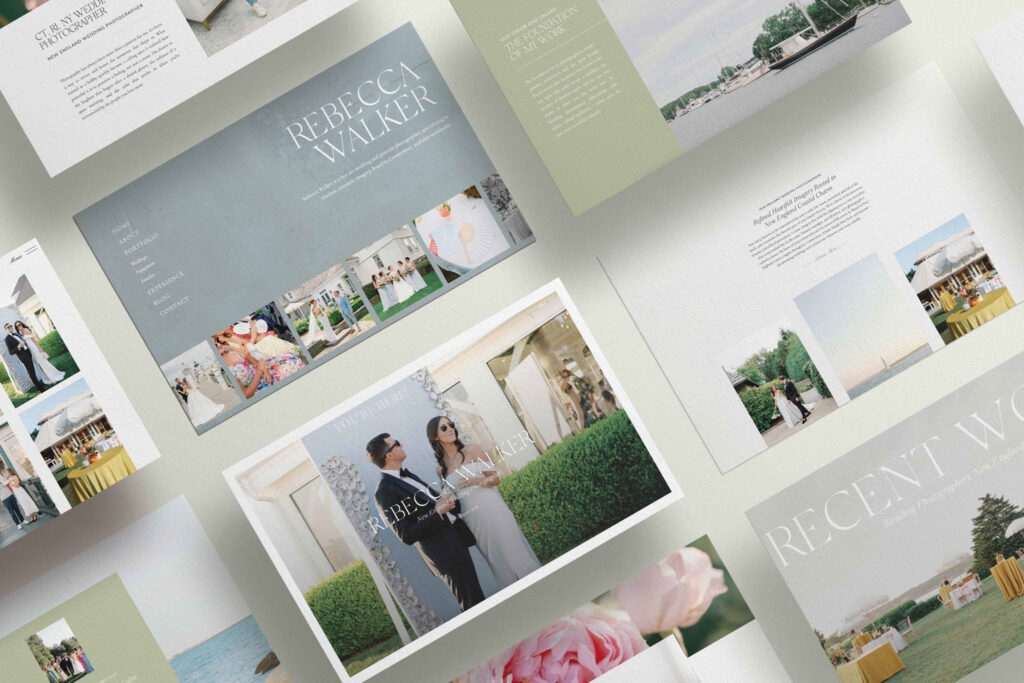
Our Showit website design services combine refined design, SEO, and conversion-focused copywriting to help photographers create websites that support the businesses they’re building, rather than the ones they launched years ago.
Don’t Overlook Referrals From the Clients Who Already Love Your Work
Your existing clients can remain an important part of your marketing strategy, even when they no longer book your full sessions themselves.
A longtime client might have a friend who’s looking for a more comprehensive portrait experience or a family member planning a wedding that aligns with your specialty. If they continue following your work and understand how your services have evolved, they can still introduce you to people who are a wonderful fit for your business.
Keep those relationships warm through your newsletter, thoughtful follow-ups, and the exclusive petite sessions we discussed earlier. You can also build referral relationships with businesses that serve a similar clientele, such as wedding planners, interior designers, or local boutiques, depending on your photography specialty.
You don’t need to abandon the marketing channels that helped you get started. You need to develop additional ways for the right clients to discover you.
And remember, this transition may take time. A new website or SEO strategy won’t necessarily replace your previous booking pipeline overnight. Give yourself room to establish visibility, evaluate your inquiries, and refine your positioning as your new pricing becomes an established part of your business.
Make Sure Your Photography Packages Reflect Your New Rates
You’ve done the financial work, communicated your price increase, and started building a marketing strategy that reaches clients who align with your next stage of business. Now it’s time to look at what those clients will receive when they book you.
One of the most common mistakes photographers make when raising their prices is increasing their session fee without reconsidering how their services are presented. Your existing packages may have been designed when you were focused on building your portfolio or competing for bookings in local Facebook groups. They may no longer reflect your experience, the clients you want to attract, or the way you want to run your business.
That doesn’t mean you need to add more hours, include every digital image, or introduce expensive products to justify your new rates. In fact, adding deliverables without understanding their costs can leave you working just as hard for very little additional profit.
Instead, consider whether your photography packages communicate the experience you’re now offering and give clients meaningful choices about how they want to invest.
Revisit What’s Included in Your Photography Packages
Start by reviewing your existing collections. Which deliverables do clients consistently appreciate? Which ones rarely influence their booking decisions? Are you including products or services that require considerable time or expense without contributing much to the client experience?
For example, you may have originally included every edited digital image because it made your sessions easier to sell. As your business grows, you might decide to introduce a more intentional structure with a set number of included images, opportunities to purchase additional photographs, and professional artwork for clients who want to display their portraits.
For wedding photographers, the decision might involve restructuring coverage, engagement sessions, additional photographers, albums, or rehearsal dinner coverage.
The goal is to develop offerings that make sense for your clients while supporting your financial requirements.
You don’t need to change everything at once, either. If your existing collections are booking consistently and generating healthy profits, a thoughtful adjustment to your starting investment may be sufficient. If your packages are confusing, expensive to fulfill, or attracting inquiries that don’t align with your business, a more comprehensive restructuring may be appropriate.
For a deeper look at building your collections, explore our Photography Pricing Packages: How to Build Packages Clients Actually Want guide.
Choose a Pricing Structure That Supports Your Client Experience
There are two common approaches to presenting photography packages: established collections with clearly defined inclusions and customizable offerings that allow clients to build their experience around a starting collection.
Neither is inherently better. The right structure depends on your clientele, the services you provide, and how much flexibility you want to offer.
High Tide Strategy Investment Guides
Two Ways to Present Your New Photography Prices
Whether you offer established collections or
customizable experiences, your investment guide
should communicate the value behind your pricing.
Defined Collections
The Legacy Collection
A refined investment guide for photographers
who prefer presenting thoughtfully structured
collections with clearly differentiated
offerings and investment levels.
Designed For
✓
Established photography collections
✓
Clearly communicated package differences
✓
Presenting the experience behind
each investment
Customizable Collections
The Truckee Investment Guide
An elevated investment guide for photographers
who want to establish a base collection and
give clients the flexibility to personalize
their experience through optional enhancements.
Designed For
✓
A clear starting collection
✓
Personalized coverage and enhancements
✓
A flexible, build-your-own
pricing experience
Both investment guides coordinate with their
respective
Showit website templates
,
creating a cohesive experience from your website
to your pricing presentation.
Both guides pair with their respective Showit website templates, creating a consistent visual experience from a client’s first website visit through the moment they receive your pricing.
Communicate the Experience Behind Your New Photography Prices
When you’re transitioning into a higher investment level, your pricing presentation needs to do more than list what’s included.
A client considering a comprehensive portrait collection may appreciate knowing that you’ll help coordinate their wardrobe, guide them through the session, and assist with selecting artwork for their home. A wedding couple may value your ability to collaborate with their planner, anticipate important moments, and provide a calm, organized experience throughout their celebration.
Those benefits deserve space in your investment guide.
Instead of presenting your collections as a list of specifications, explain what the client can expect from working with you and how each offering supports their priorities. Be clear about your deliverables, but connect them to the experience and outcome your clients are purchasing.
This is also an opportunity to ensure your pricing presentation feels consistent with your website. If your website communicates a refined, personalized experience but your investment guide is a basic list of packages and prices, that disconnect may make it harder for prospective clients to understand your positioning.
Your portfolio, website, investment guide, and inquiry process should all communicate the same level of care.
Give Your New Packages Time to Establish Themselves
After updating your prices and collections, resist the temptation to make immediate changes every time an inquiry doesn’t turn into a booking.
Some prospective clients won’t have the budget for your new rates. Others may be comparing photographers, reconsidering their priorities, or planning to book at a later date. An individual inquiry rarely provides enough information to determine whether your pricing is working.
Instead, track your inquiries, bookings, average revenue per client, and profitability over a meaningful period. Pay attention to which collections clients select, which enhancements they purchase, and whether your new offerings support the schedule and income goals you’ve established.
If you’re attracting plenty of qualified inquiries but very few bookings, review your messaging, pricing presentation, and inquiry process before assuming your rates are the problem.
Inside The Marketing Lab, we help photographers work through these decisions, from refining their collections to developing marketing strategies that support their next stage of growth.
Your photography packages should be able to evolve alongside your business. The objective isn’t to create a perfect price list that never changes, but to develop offerings that continue serving both your clients and your financial goals.
Frequently Asked Questions About Raising Your Photography Prices
How often should photographers raise their prices?
There’s no universal schedule for increasing your photography prices. Review your rates at least annually, accounting for changes in business expenses, experience, client demand, and booking capacity. If you’re consistently booked but struggling to meet your income goals, you may need to reevaluate your pricing sooner.
Rather than increasing your rates simply because another year has passed, make sure each adjustment supports your financial goals and the experience you provide.
How much should I increase my photography prices?
Your price increase should reflect your actual financial requirements, current demand, and business goals rather than an arbitrary percentage. A modest annual adjustment may be appropriate for one photographer, while another may need to restructure their entire pricing model after years of undercharging.
Start with our free Photography Pricing Calculator to estimate the average revenue your business needs per booking. Then evaluate whether your packages, marketing, and client experience can support your proposed rates.
Will I lose clients if I raise my photography prices?
You may lose some bookings when you increase your rates, particularly if your existing clients originally chose you because of your introductory pricing. However, other clients may continue booking your full sessions because they value your work and the relationship you’ve developed.
The goal is to communicate your changes thoughtfully, continue nurturing those relationships, and develop marketing strategies that reach new clients who align with your current offerings.
Should I offer discounts to my existing photography clients?
You don’t need to maintain your previous rates indefinitely to show appreciation for your loyal clients. Instead, consider offering advance booking opportunities before your price increase or creating exclusive newsletter-only petite sessions with shorter appointments and fewer included images.
These offerings allow returning clients to continue working with you while maintaining a clear distinction between your full photography experience and your limited-session events.
How do I attract photography clients who can afford my new prices?
Start by evaluating where your current inquiries originate and whether those channels reach people looking for the experience you now provide. Your SEO strategy, website messaging, portfolio, referral relationships, and pricing presentation should all reflect your current positioning.
Increasing your rates without updating your marketing can leave you trying to sell a new experience to an audience that was attracted to your introductory pricing.
Our SEO services and Showit website design help photographers build the visibility and website experience needed to reach and convert more aligned clients.
Growing Your Photography Business Doesn’t Mean Leaving Everyone Behind
Raising your photography prices is an important business decision, but it doesn’t have to change the relationships you’ve spent years building. The families who trusted you with their first portraits, recommended you to their friends, and returned for milestone sessions can remain part of your business even as your services and pricing evolve.
Some clients will grow with you and continue booking your full photography experience. Others may prefer to join you for exclusive newsletter-only petite sessions, seasonal mini sessions, or special occasions when they’re ready to make a larger investment. By creating thoughtful opportunities for both, you can continue nurturing those relationships without maintaining prices that no longer support your business.
The next chapter of your photography business also requires looking beyond your existing clientele. Your marketing should reach people who value the experience you’re offering today, your website should communicate that experience clearly, and your packages should reflect both your clients’ needs and your financial goals.
You don’t need to accomplish all of this at once. Start by understanding what your business needs to earn, identify which parts of your current pricing and marketing need attention, and develop a realistic plan for introducing your new rates.
If you’re ready to make that transition but aren’t sure where to begin, The Marketing Lab is where we help photographers work through these decisions together. From refining your pricing and packages to attracting aligned clients through SEO and more intentional marketing, you’ll have guidance as you build a photography business that supports your next stage of growth.
Your photography business can evolve without losing the relationships that made it meaningful in the first place.
About the Author | Mandy Ford
Mandy Ford is the founder and lead strategist behind High Tide Strategy, a full-service marketing studio specializing in SEO for photographers, Showit website design, and digital marketing for creative businesses. She helps photographers, wedding professionals, and creative brands build stronger visibility across Google, AI search, and social search… then turn that visibility into qualified inquiries. Known for looking beyond surface-level SEO tactics, Mandy’s approach connects search strategy, website design, and aesthetics to build businesses that are easier to find, understand, trust, and hire online. Want to see if we’re a great fit? Reach out to schedule your free consultation.
"They made everything feel very intentional and strategic from the beginning. They took the time to understand not just my business, but the type of clients I want to attract. That gave me a lot of confidence that the investment would actually move the needle, not just improve aesthetics...."
- Catherine Cortes, RI Wedding Photographer
"I felt comfortable investing in a website design with High Tide Strategy because there is a team of people working on my website who knows their stuff when it comes to SEO, while also making my website aesthetic, and on top of that they get your website back to you within a week which is super nice!"
- Emma Rose Photography
"Mandy and her team stay on top of the latest marketing strategies and genuinely care about helping business owners succeed. I am so grateful I chose to work with them."
- Erica Ewing, Photographer & Business Coach
Today, Mandy partners with photographers, designers, and creative entrepreneurs to bring discernment, simplicity, and strategy back into modern marketing.
Her work challenges the idea that marketing must choose between beauty and results.
Mandy is a marketing strategist and creative director known for blending artistry with analytical precision.
Guided by the belief that strategy and design should coexist seamlessly, she creates cohesive, full-stack marketing systems that help creative brands scale with confidence while preserving their aesthetic integrity.
Founder strategist Wife Dog Mom coastal Enthusiast
Inspired by coastal living, her approach is intentional, intuitive, and artfully executed—from first impression to final conversion.
Mandy Ford
With international marketing experience spanning from motorsports to fine art, she brings a holistic perspective to brand growth that is rooted in clarity, design, and data-driven intention.
A full-service digital marketing agency specializing in Showit website design, Shopify website design, SEO for creatives, and paid ad strategy across Pinterest, Meta, and Google. We help photographers, small business owners, and creative entrepreneurs build intentional brands that align with their vision and drive measurable results. Our signature services include social media marketing, Pinterest management, and 7-Day SEO and Ad Strategy Surges — all designed to increase visibility, improve conversions, and simplify growth. At High Tide Strategy, we combine data-driven strategy with refined design to create marketing systems that are both beautiful and built to perform.